Wisdom Teeth Removal Near Berkeley, CA
Welcome to
Piedmont Implant Oral Surgery
If you're searching for wisdom teeth removal near Berkeley, you've probably already noticed that not all dental offices are created equal — especially when it comes to oral surgery. Whether you're a Cal student dealing with an impaction that can't wait, or a longtime East Bay resident who's been putting this off for years, you deserve a surgeon who's done this thousands of times and treats you like a neighbor, not a chart number. Dr. Jesse Han and the team at Piedmont Implant Oral Surgery are based in Oakland, just a short drive from Berkeley, and built around making a procedure most people dread feel genuinely manageable. Give us a call at (510) 328-3448 — we're glad you found us.
Wisdom Teeth Removal
Near Berkeley, CA
There's a reason Berkeley and East Bay residents specifically seek out oral surgeons for wisdom tooth removal rather than heading to their regular dentist. Wisdom teeth — especially impacted ones — aren't a routine cleaning. They're surgical extractions that involve bone, nerves, and in some cases, general anesthesia. An oral surgeon completes four additional years of hospital-based surgical residency after dental school, specifically training for cases like these. That training matters when your third molars are fully impacted, sitting at an angle, or wrapped around your inferior alveolar nerve.
Dr. Jesse Han brings that level of specialized training to every extraction he performs. For straightforward erupted wisdom teeth, a general dentist can sometimes handle the job — but when things get complicated, and they often do, you want a specialist. Patients come to Piedmont Implant Oral Surgery from Berkeley, Oakland, Alameda, El Cerrito, and across the East Bay because they want the procedure done right the first time, with the right anesthesia options and the right hands.

Oral Surgeon for
Wisdom Teeth Removal
Choosing an oral surgeon over a general dentist for wisdom teeth isn't about snobbery — it's about safety and outcomes. Here's what actually separates the two when it comes to third molar surgery:
Complexity of impacted teeth
Impacted wisdom teeth are classified by their position and depth — soft tissue impaction, partial bony, or full bony. Full bony impactions require cutting through bone, carefully sectioning the tooth, and suturing the site. This is routine for Dr. Han. For a general dentist, it may be at or beyond the edge of their training.
Surgical and anesthesia training
Oral surgeons are licensed to administer IV sedation and general anesthesia in an office setting. This means you can be fully asleep or deeply sedated for your procedure if that's what you want — something most general dentists simply cannot offer. For patients with dental anxiety, this changes everything.
Safety and complication management
If a nerve is near the root tip, if the roots are curved, if the tooth is unusually deep — Dr. Han has the imaging, instruments, and training to manage these scenarios confidently. That's not a risk worth taking with someone who does a handful of extractions a year.


Wisdom Tooth Removal Surgery
Here's what the actual process looks like from first call to final stitch at Piedmont Implant Oral Surgery, so there are no surprises.
.svg)
Initial Consultation and Imaging
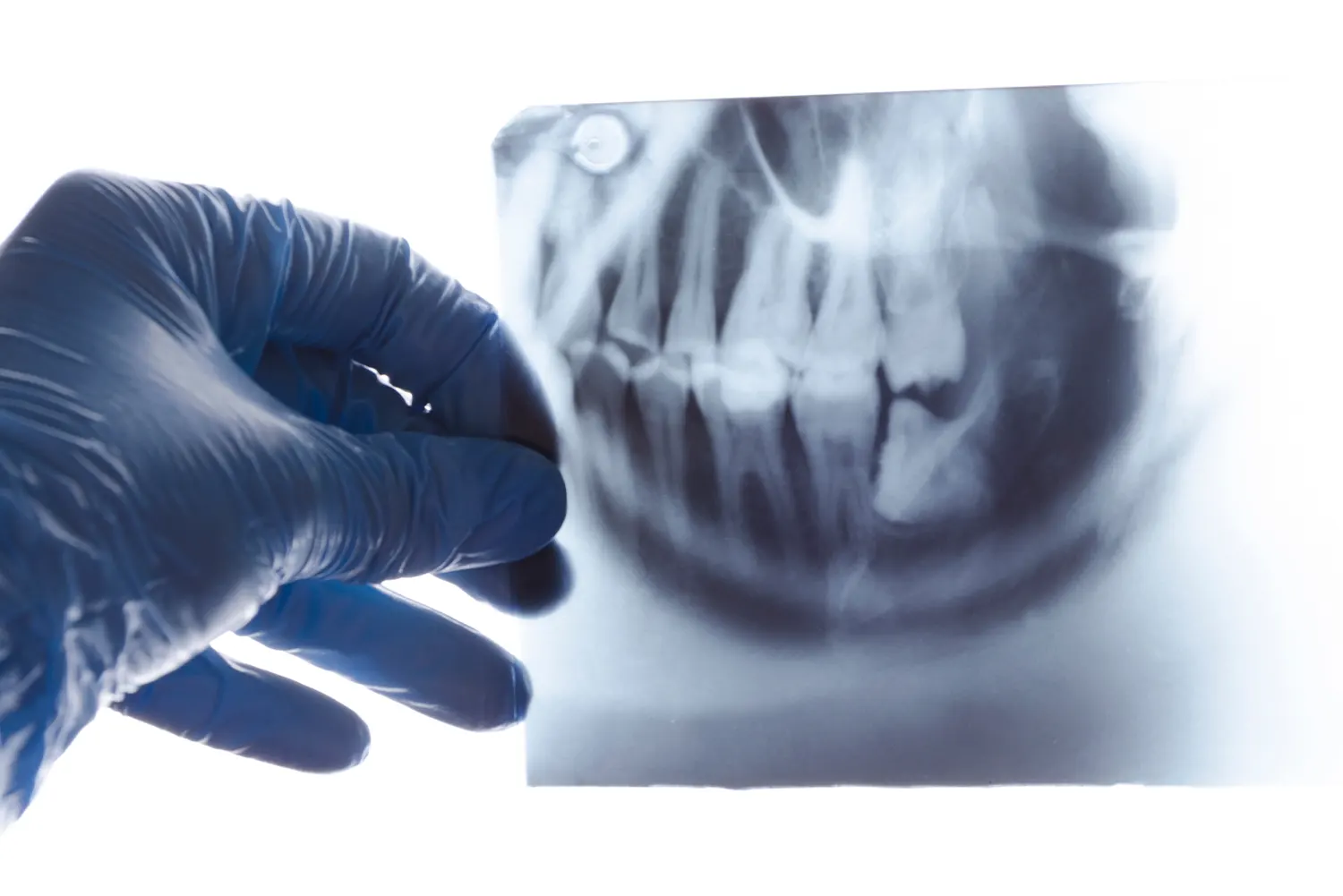
Your first appointment with Dr. Han includes a clinical exam and panoramic X-rays, and often a CBCT (cone beam CT) scan if your case warrants a 3D view. The CBCT lets us see exactly where your roots are in relation to the inferior alveolar nerve — critical for lower wisdom teeth removal. This is also when you'll discuss anesthesia options and get every question answered before the day of surgery.
Anesthesia Options
You have real choices here. Local anesthesia alone numbs the area but you remain awake and aware. IV sedation — the most popular option — puts you in a deeply relaxed, twilight state where most patients remember nothing. General anesthesia is available for more complex cases or patients with significant anxiety. Dr. Han will walk you through which option fits your procedure and your comfort level.
The Extraction Itself
Erupted wisdom teeth are the most straightforward — often removed similarly to any other tooth. Soft tissue impactions require a small incision to expose the crown. Partial and full bony impactions involve carefully removing overlying bone and sectioning the tooth into pieces before extraction. The more complex the impaction, the more you benefit from an experienced oral surgeon like Dr. Han.
What Happens in the Chair
From the time you're seated to when you're walking to recovery, most four-tooth wisdom teeth removal cases take between 45 minutes and 90 minutes, depending on complexity. You'll feel pressure but not pain. Dr. Han and his team monitor you throughout and you'll leave with clear post-op instructions and a direct line to reach the office if anything comes up.
Recovering From Your
Wisdom Tooth Removal Surgery
Recovery is where most patients have the most questions — and the most anxiety. Here's a realistic, day-by-day breakdown.
First 24 Hours
This is the most important window. Bite down gently on the gauze placed after surgery and change it every 30–45 minutes as needed. Keep your head elevated, even while sleeping. Avoid spitting, rinsing, or using a straw — these actions can dislodge the blood clot forming in the socket. Take your prescribed pain medication before the local anesthetic wears off, not after. Ice packs applied to your cheeks in 20-minute intervals will help with swelling.
Days 2–4
Swelling typically peaks around day 2 or 3 before starting to resolve. You'll likely still be managing discomfort with ibuprofen, acetaminophen, or a prescribed medication. Stick to soft foods, stay hydrated, and rest as much as you can. Gentle salt-water rinses — after the first 24 hours — help keep the sites clean without disturbing the clot.
Days 5–7
Most patients see significant improvement by day 5. Swelling fades, pain becomes much more manageable, and you'll start feeling more like yourself. Dissolvable stitches will begin to break down on their own. If Dr. Han placed non-dissolvable sutures, we'll schedule a quick follow-up to remove them.
Warning Signs: Dry Socket and Infection
Dry socket occurs when the blood clot is lost or fails to form properly, leaving the bone exposed. It typically starts around day 3–5 with a sharp, escalating pain that radiates toward the ear — distinctly worse than the normal recovery ache. Signs of infection include increasing pain after day 3, worsening swelling, fever, foul taste, or discharge from the site.
When to Call the Office
Call Piedmont Implant Oral Surgery at (510) 328-3448 if: pain is worsening after day 3, you develop a fever over 101°F, you notice pus or unusual discharge, your jaw won't open more than a finger-width, or something just feels off. We'd always rather hear from you than have you wait and worry.
What To Eat During Your
Third Molar Removal Recovery
Diet is one of the most overlooked parts of a smooth recovery — and one of the easiest places to accidentally set yourself back.
Foods to focus on: Smoothies (no straw — drink directly from the cup), Greek yogurt, mashed potatoes, scrambled eggs, soft oatmeal, broths and soups served warm but not hot, cottage cheese, applesauce, and soft fish. Nutrient-dense, protein-rich options help your body heal faster.
Foods and habits to avoid completely: Straws — the suction can pull out your clot. Crunchy or hard foods like chips, crackers, nuts, or popcorn. Spicy foods that irritate healing tissue. Alcohol, which interferes with healing and interacts badly with pain medications. Hot liquids in the first 24–48 hours, which can dissolve the clot.
The blood clot in each extraction socket is doing serious work — it's the foundation your healing tissue builds on. Protecting it for the first few days is the single most important thing you can do to avoid complications and get back to normal faster.

Frequently Asked Questions
Nothing — they're the same teeth. "Third molars" is the clinical term; "wisdom teeth" is what most people call them in everyday conversation. They typically erupt between ages 17 and 25, a period once associated with the arrival of maturity or "wisdom." Most people have four, one in each corner of the mouth, though some people have fewer and a small percentage never develop them at all. When Dr. Han or your general dentist says your third molars need to come out, they mean your wisdom teeth.
We're located in Oakland, just minutes from Berkeley. Dr. Han regularly sees patients from Berkeley, Albany, El Cerrito, Emeryville, Rockridge, and across the East Bay — including UC Berkeley students who need care that fits around a busy academic schedule. Getting to our Oakland office from most Berkeley neighborhoods typically takes under 15–20 minutes. To get specific directions or find out about parking, give us a call at (510) 328-3448 and we'll make sure getting here is the easy part.
Yes — Piedmont Implant Oral Surgery works with most major dental insurance plans, and our team will verify your benefits before your appointment so there are no billing surprises. Many plans cover a portion of wisdom tooth removal, particularly when the extractions are medically necessary due to impaction, infection, or crowding. We also offer flexible payment options for patients whose insurance doesn't fully cover the procedure. Bring your insurance information to your consultation with Dr. Han and we'll handle the research for you — we'd rather talk through your coverage upfront than send you an unexpected bill after the fact.
An impacted wisdom tooth is one that can't fully erupt because it's blocked — by another tooth, by bone, or by the angle it's growing at. There are different levels of impaction: soft tissue (partially covered by gum), partial bony (partially covered by bone), and full bony (completely enclosed in bone). The deeper the impaction, the more involved the surgery. Full bony impactions require the surgeon to carefully remove overlying bone before the tooth can be sectioned and extracted. This is precisely why a specialist like Dr. Jesse Han — with oral surgery residency training, advanced imaging, and the ability to offer IV sedation — is better equipped for complex impactions than a general dental practice.